HyperOS vs OneUI 7 vs ColorOS 14 vs Pixel UI (2025): Which Android Skin Is Best for You?
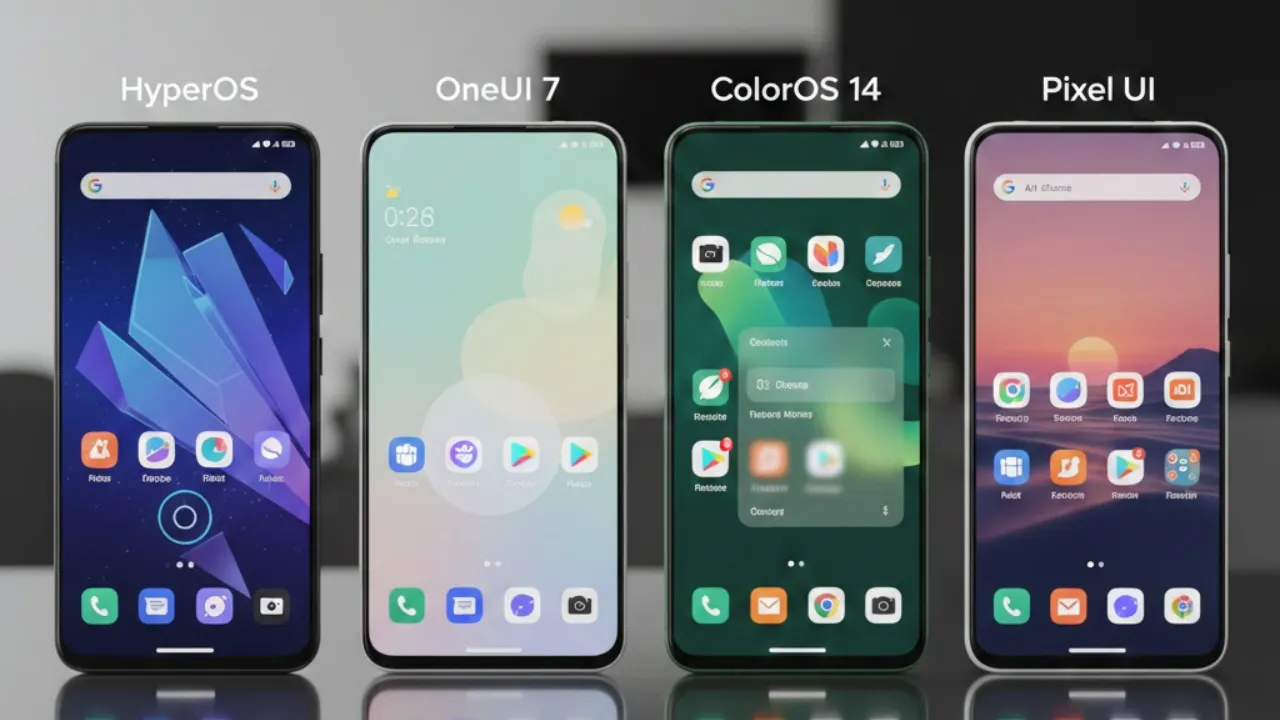
HyperOS vs OneUI 7 vs ColorOS 14 vs Pixel UI (2025): The Android world in 2025 is more diverse than ever. What used to be simple manufacturer skins layered on top of Google’s system has evolved into full-fledged ecosystems—each with its own design philosophy, AI engine, features, and workflow. Xiaomi’s HyperOS, Samsung’s OneUI 7, OPPO’s ColorOS 14, and Google’s Pixel UI now represent four different visions of what modern Android should be.
Choosing the “best” Android skin is no longer about looks alone. It now depends on long-term software support, stability, ecosystem integration, AI capabilities, performance, and how well each UI blends with hardware.
Before diving deep, here is the quick verdict:
- HyperOS → Best for ecosystem lovers and users wanting Apple-like device integration.
- OneUI 7 → Best for professionals, power users, multitaskers, and long-term stability.
- ColorOS 14 → Best for visual-design fans, animation lovers, and camera-focused users.
- Pixel UI → Best for minimalists, clean UI lovers, and those who want fast updates + powerful Google AI.
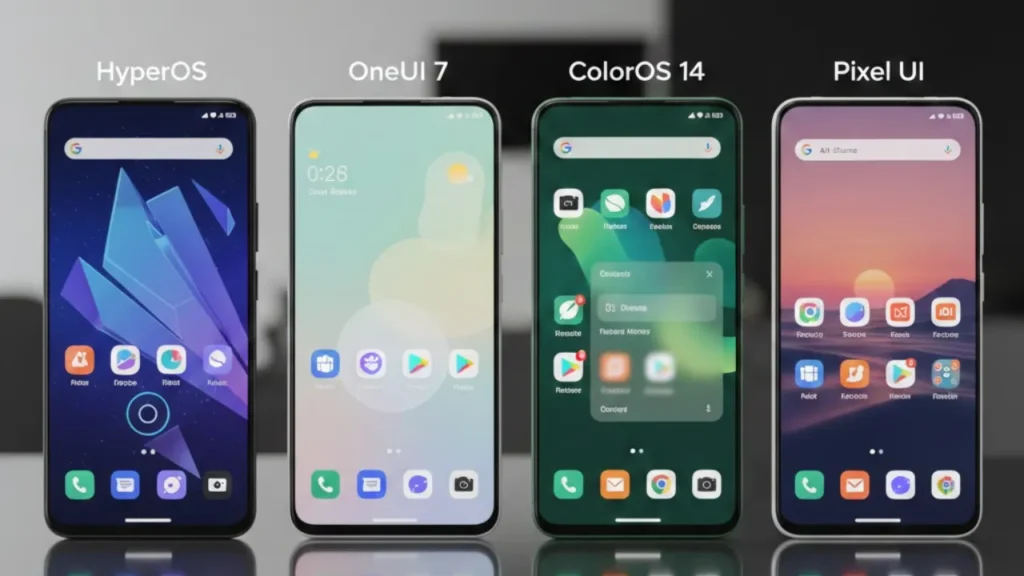
HyperOS: Xiaomi’s Bold New Identity
HyperOS marks Xiaomi’s biggest shift in over a decade. Built as a complete evolution beyond MIUI, it focuses on:
1. A True Multi-Device Ecosystem
HyperOS aims to unify Xiaomi phones, tablets, TVs, wearables, smart home devices, and even Xiaomi EVs into a seamless ecosystem. Features like:
- Drag-and-drop across devices
- Global clipboard
- Auto-pairing tablets
- Real-time cross-device control
…make HyperOS the closest Android skin to rival Apple’s ecosystem in 2025.
2. Smooth, Lightweight, Fluid UI
HyperOS feels far lighter than MIUI ever did. Animations are smoother, transitions faster, and the interface adopts a clean aesthetic that borrows minimalism from Pixel UI while retaining Xiaomi’s signature style.
3. HyperMind AI Engine
Xiaomi’s new AI system predicts user behavior, automates tasks, and synchronizes routines across devices. It is powerful yet still growing.
Where HyperOS Falls Short
- Inconsistent experience across device segments (budget models feel different).
- Some regions still receive unnecessary bloatware.
- Not ideal for minimalists—they might still find the UI dense.
Verdict: The best ecosystem-centric Android experience, ideal for users with multiple Xiaomi devices.
OneUI 7: Samsung’s Mature, Professional Powerhouse
Samsung’s OneUI 7 is the most stable and polished Android skin in 2025. It isn’t flashy or experimental—it’s built for productivity, consistency, and long-term support.
1. The Best UI for Big Screens & Foldables
Samsung leads the foldable market, and OneUI 7 reflects that:
- Superior multitasking
- Taskbar with desktop-like functionality
- Intelligent multi-window
- Optimized gestures
Foldables like the Galaxy Z Fold 7 run at near-desktop productivity levels.
2. Galaxy AI Everywhere
Key features include:
- Circle to Search
- Live translation
- AI photo editing
- Real-time call summaries
- AI-enhanced Samsung Notes
OneUI 7 integrates AI in a practical, non-gimmicky way.
3. The Best Update Policy
Samsung still offers 7 years of OS + security updates, beating almost all Android OEMs except Google.
Where OneUI 7 Struggles
- Heavy system; may lag on cheaper models.
- Feature-rich UI may feel overwhelming to minimalists.
- Heavier animations compared to Pixel UI or ColorOS.
Verdict: The best option for productivity users, power users, and anyone who values long-term stability.
ColorOS 14: The Smoothest, Most Playful Android Skin
ColorOS 14 is OPPO’s most refined interface to date—beautiful, fluid, and rich in animations.
1. Flagship-Level Smoothness
Powered by OPPO’s Quantum Animation Engine, ColorOS delivers:
- Hyper-smooth transitions
- Premium-feeling animations
- Great haptic feedback
- Fast app launches
Even mid-range devices feel premium.
2. Bold, Playful, Customizable Design
ColorOS 14 offers:
- Dynamic colors
- Deep AOD customization
- Modern themes
- Smart Space widgets
- A cheerful, vibrant design philosophy
It balances visual flair with efficiency.
3. Strong AI for Photography & Privacy
ColorOS focuses greatly on AI tools like:
- AI Smart Eraser
- Portrait Pro Mode
- Scene detection
- Retouching features
Privacy dashboards and granular permissions make it user-friendly.
Where ColorOS Falls Short
- Too many features & settings for simple users.
- Bloatware varies by region.
- Update schedule still behind Samsung and Google.
Verdict: The best UI for users who love animation fluidity, rich customization, and camera-focused AI tools.
Pixel UI: Google’s Clean, Minimal, AI-First Experience
Pixel UI remains the purest expression of Android.
1. Cleanest, Most Minimal Interface
Pixel UI is lightweight, distraction-free, and visually clean. It is ideal for users who hate clutter and want a no-nonsense experience.
2. Best AI Integration
Pixel UI leads in:
- Gemini Nano on-device AI
- Smart replies
- AI Call Assist
- Recorder summaries
- Magic Editor
- Real-time transcriptions
Google’s AI tools feel futuristic but extremely usable.
3. Fastest Android Updates
Pixel devices always get new Android versions first, and Google continues to push features via Feature Drops.
Where Pixel UI Falls Short
- Less customization compared to rivals.
- Limited ecosystem compared to HyperOS or OneUI.
- Fewer visual flourishes than ColorOS.
Verdict: Perfect for minimalists, clean UI fans, and users who want the fastest updates + best Google AI.
Final Comparison: Which One Should You Choose?
| Category | Winner |
|---|---|
| Ecosystem Integration | HyperOS |
| Multitasking & Productivity | OneUI 7 |
| Smoothest Animations | ColorOS 14 |
| Cleanest & Fastest Updates | Pixel UI |
| Best AI Features | Pixel UI & OneUI 7 |
| Most Customization | ColorOS 14 |
| Best Long-term Support | OneUI 7 |
Overall Summary
- Choose HyperOS if you love an Apple-like ecosystem and smooth cross-device workflow.
- Choose OneUI 7 if you want stability, productivity, or you use Samsung foldables.
- Choose ColorOS 14 if you want the most fluid animations and a visually rich UI.
- Choose Pixel UI if you want minimalism, clean design, and the best Google AI.
Also read;
Vivo X300 FE Expected to Launch in Early 2026: Likely a Rebadged Vivo S50 Pro Mini
Samsung Galaxy Z TriFold: Leaked User Manual Reveals How It Actually Works in Daily Use


Post Comment