
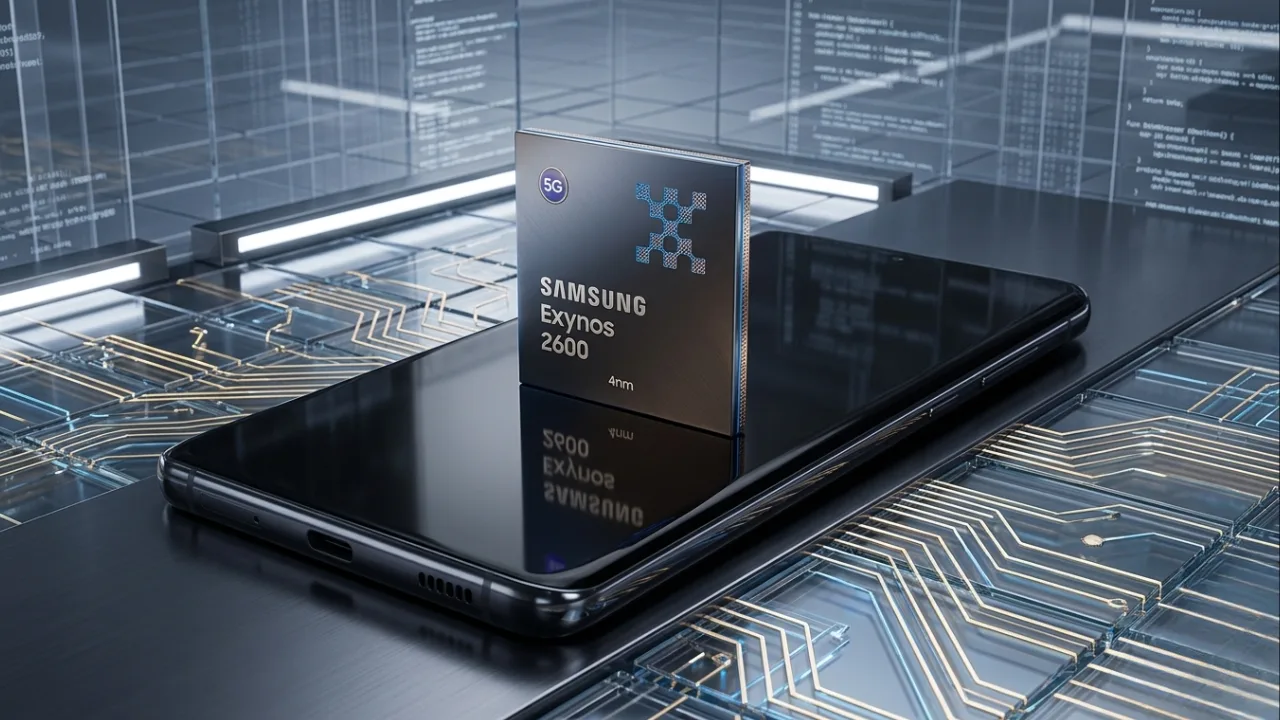

Samsung may already be laying the groundwork for its next flagship smartphone lineup. According to a recent report from South Korea, the company has reportedly started development of the Exynos 2700 chipset, which is expected to succeed the current Exynos 2600 processor and could power select models in the upcoming Galaxy S27 series.
The development reportedly marks Samsung’s continued efforts to strengthen its in-house semiconductor business and compete more aggressively in the flagship mobile chipset market.
Samsung Executive Allegedly Confirms Exynos 2700 Development
According to reports, Samsung’s President of System LSI Business, Park Yong-In, recently revealed during an internal briefing that development of the Exynos 2700 processor is already underway.
The executive reportedly stated that work on the next-generation chipset is progressing smoothly without major obstacles. While Samsung has not officially announced the processor, the remarks suggest that the company is actively preparing its next flagship mobile platform.
The Exynos 2700 is expected to replace the Exynos 2600, which debuted earlier this year in select Galaxy S26 models.
Could Power the Samsung Galaxy S27 Series
Although Samsung has not confirmed which devices will use the new processor, industry speculation points toward the Galaxy S27 lineup as one of the first smartphone series to feature the Exynos 2700.
The company has historically used a mix of Exynos and Snapdragon processors across different regions. If development continues on schedule, the new chipset could make its debut alongside Samsung’s next-generation flagship smartphones in 2027.
The move would help Samsung continue expanding the use of its proprietary silicon in premium devices.
Exynos 2700 Previously Spotted Online
Rumors surrounding the Exynos 2700 surfaced earlier after a chipset believed to be the processor appeared on a benchmarking platform.
The listing reportedly carried the model number S5E9975 and revealed several early hardware details.
According to the leak, the chipset may feature a 10-core CPU architecture, indicating Samsung is focusing on balancing performance and power efficiency.
Expected CPU Configuration
The benchmark listing suggested the processor could include:
- One performance core clocked at 2.30GHz
- Four cores running at 2.40GHz
- One additional core at 2.78GHz
- Four high-performance cores reaching up to 2.88GHz
While these specifications remain unconfirmed, they provide an early glimpse into Samsung’s next-generation processor design.
The final commercial version could differ from the benchmarked sample currently being tested.
Xclipse 970 GPU May Power Graphics Performance
The report also claims the Exynos 2700 will feature Samsung’s upcoming Xclipse 970 GPU.
Samsung has increasingly focused on improving graphics capabilities through its Xclipse series GPUs, which are based on AMD graphics technologies.
If the rumors prove accurate, users could benefit from:
- Better gaming performance
- Improved graphical effects
- Enhanced ray tracing support
- More efficient power consumption
- Smoother high-refresh-rate gaming experiences
Graphics performance has become a key battleground among flagship smartphone processors, making GPU upgrades increasingly important.
Early Benchmark Scores Revealed
The leaked benchmark entry also offered an early look at potential performance numbers.
According to the report, the device running the Exynos 2700 achieved:
- 2,603 points in single-core performance
- 10,350 points in multi-core performance
While benchmark results should always be treated cautiously before launch, the figures suggest Samsung is targeting flagship-level performance.
The test device was reportedly equipped with approximately 12GB of RAM and running Android 17.
Samsung Continues Investing in Exynos
The development of the Exynos 2700 highlights Samsung’s long-term commitment to its semiconductor division.
In recent years, the company has invested heavily in:
- Advanced chip manufacturing
- AI processing capabilities
- Mobile GPU technology
- Energy-efficient architectures
- Next-generation fabrication processes
Samsung’s Exynos 2600 already gained attention as one of the first mobile processors built using a 2nm manufacturing process, and expectations are high for its successor.
Challenges Remain for the Semiconductor Industry
Despite progress on future chipsets, reports indicate Samsung’s semiconductor division may continue facing industry challenges.
Market analysts have pointed to ongoing supply chain pressures and fluctuations in memory and storage demand that could impact profitability across the semiconductor sector.
However, Samsung appears committed to maintaining investment in next-generation mobile technologies despite broader industry uncertainties.
What to Expect Next
If Samsung follows its usual release schedule, more details about the Exynos 2700 could emerge in the coming months through certifications, benchmark listings, and supply chain leaks.
The processor is expected to play a major role in Samsung’s flagship smartphone strategy and could become one of the company’s most important chipset launches in recent years.
For now, the development remains unofficial, but early reports suggest Samsung is already preparing the foundation for its next generation of premium Galaxy devices.
Also read: WhatsApp May Soon Let Android Users Send Voice Messages Directly From the Home Screen
Final Thoughts
Samsung has reportedly begun development of the Exynos 2700 processor, which is expected to succeed the Exynos 2600 and potentially power select Galaxy S27 models. Early leaks point to a 10-core architecture, a new Xclipse 970 GPU, and flagship-level performance improvements.
While Samsung has yet to officially unveil the chipset, the latest reports indicate that the company’s next-generation mobile processor project is already moving forward, setting the stage for future Galaxy flagship smartphones.